
Finding a Supplier Is Easy. Importing Successfully Is the Hard Part
Many importers focus on finding suppliers but overlook customs, taxes, compliance, packaging, certifications, and logistics. Learn why successful importing requires more than supplier sourcing.
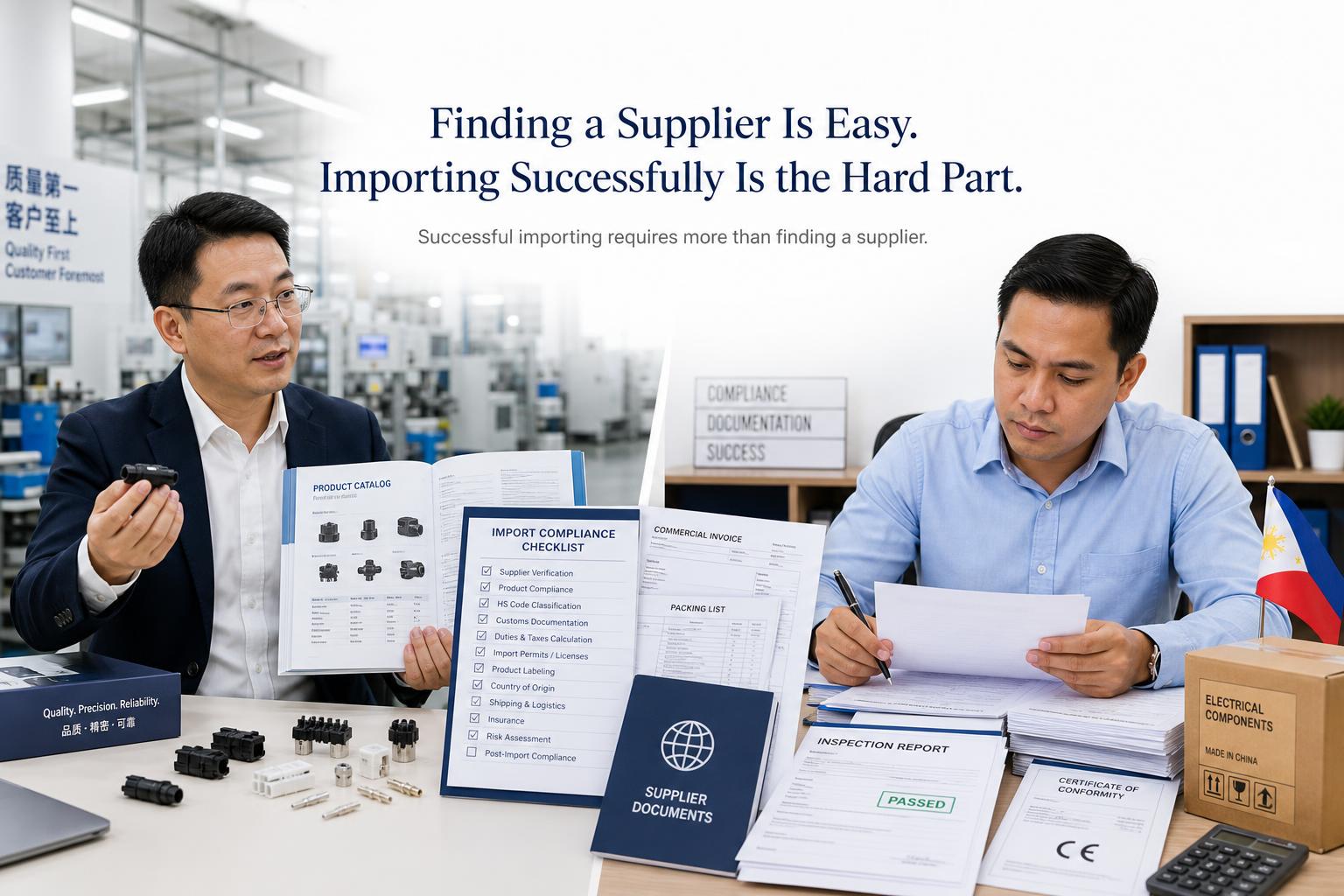
Today, it is easier than ever to find suppliers online. Facebook, TikTok, Instagram, Alibaba, and other sourcing platforms are filled with factory videos, warehouse tours, product showcases, and supplier recommendations.
Many buyers assume that if someone can find a supplier, they must understand importing. Unfortunately, that is not always the case.
Sourcing and Importing Are Not the Same Thing
Finding a supplier is only one part of the process. Successful importing requires understanding:
- Import regulations
- Duties and taxes
- Customs clearance
- Product compliance
- Certifications
- Documentation requirements
- Shipping methods
- Packaging standards
A supplier may be able to manufacture your product. A sourcing agent may be able to negotiate pricing. But neither automatically guarantees that your products can be imported successfully into the Philippines.
Questions Every Importer Should Be Asked
Before sourcing begins, a professional sourcing and procurement partner should understand:
- Are you already a registered importer?
- Is this your first shipment?
- What products are you importing?
- Will certifications be required?
- Are permits needed?
- What is your target market?
- What is your expected order volume?
These questions help identify potential issues before production begins. Surprisingly, many buyers are never asked these questions.
Factory Videos Do Not Equal Import Expertise
Many sourcing agents promote factory visits, supplier meetings, and warehouse tours on social media. While these activities can be useful, they only represent one part of the process.
The real challenge often begins after the product is manufactured. Questions that should also be considered include:
- Can the product be imported legally?
- Are certifications required?
- Are labeling requirements met?
- Is the packaging suitable for international transport?
- Are the shipping documents correct?
A supplier may be able to make the product. That does not automatically mean the product is ready for import.
Packaging Matters More Than Many Buyers Realize
Many importers focus heavily on product pricing but overlook packaging and shipping requirements. For example, a supplier may successfully manufacture an ice machine or other equipment, but use packaging that is only suitable for domestic transportation.
Potential problems include:
- Weak cartons
- Inadequate protection
- Missing labels
- Shipping damage
- Increased logistics risks
This is why packaging requirements should be discussed before production begins, not after the goods are completed.
Why Understanding the Philippine Market Matters
A sourcing decision made in China can directly affect:
- Customs clearance
- Compliance requirements
- Product acceptance
- Delivery timelines
- Total import costs
Businesses need support that considers both the supplier side and the Philippine import side.
Final Thoughts
Finding suppliers is relatively easy. Importing successfully is where experience matters.
Before choosing a sourcing partner, make sure they understand more than just supplier sourcing. The right partner should understand the entire process, from supplier selection and procurement to compliance, logistics, and successful delivery into the Philippines.
Need help sourcing products from China?
Quorium provides supplier sourcing, supplier verification, factory coordination, procurement support, and China and Philippines trade solutions.
Back to Quorium International Trade home.